A chloride-rich processing facility was rebuilding centrifuge foundations on every
major maintenance cycle — an expensive, disruptive pattern driven by reinforced
concrete that simply couldn't survive the environment. MIC replaced it with a
polymer block system that hasn't needed a single touchup in three years.
An industrial processing facility operating in a chloride-rich chemical environment
was experiencing recurring degradation of its steel-reinforced concrete centrifuge
foundations. The facility operates four centrifuges on an elevated deck, and each
major maintenance event requires crane mobilization for isolator replacement — a
mobilization that runs approximately $100,000 per day.
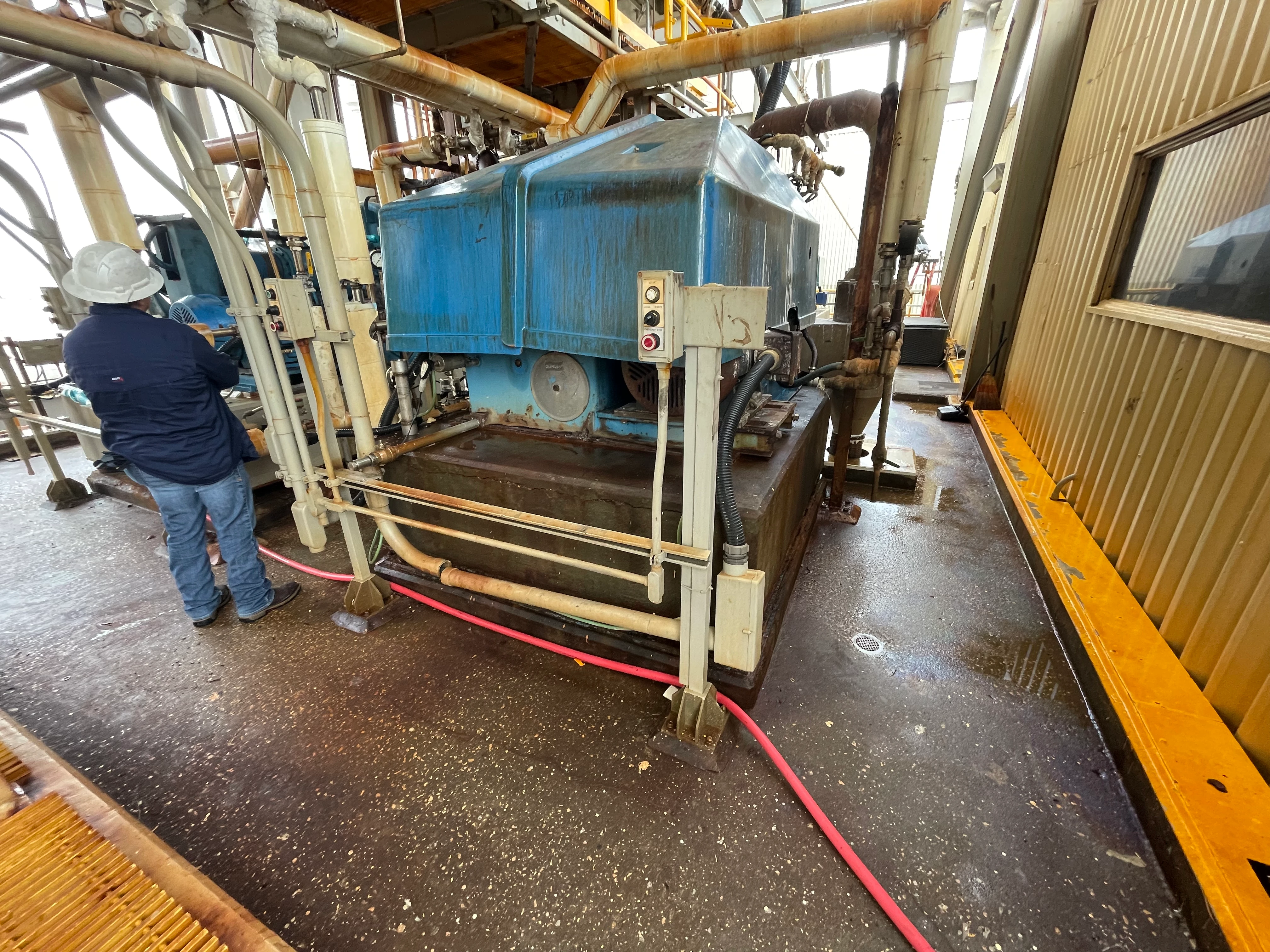
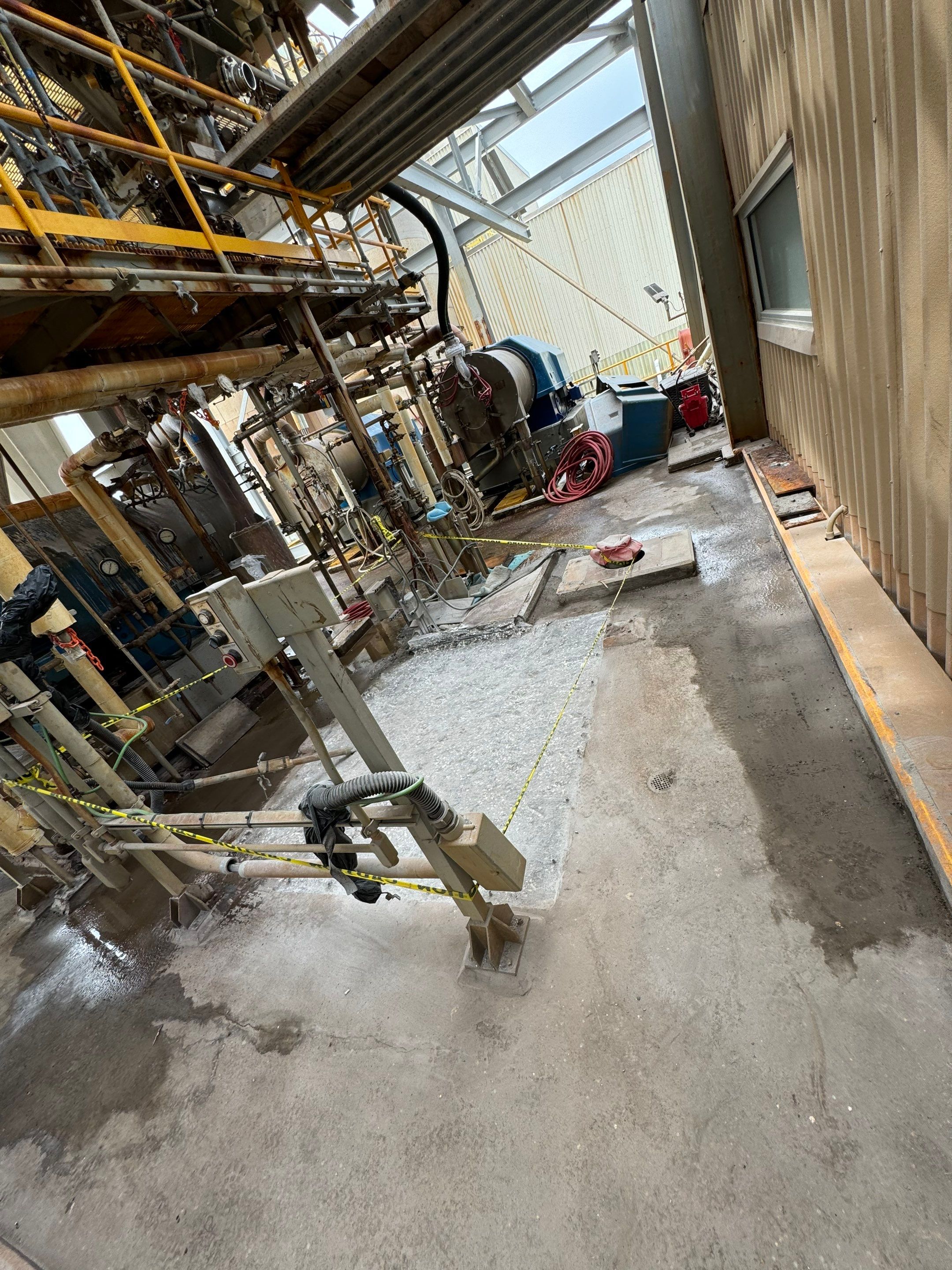
The traditional concrete foundation system was failing within the maintenance cycle.
Chloride-driven corrosion of the embedded steel reinforcement was causing cracking
and deterioration that demanded demolition and replacement during every major
shutdown — compounding outage duration and cost with each event.
Before — existing foundation deterioration from chloride exposure
// The Problem
WHY CONVENTIONAL CONCRETE KEPT FAILING
Steel-reinforced concrete is the default foundation material in most industrial
environments. In a chloride-rich environment, it becomes a liability. Chloride ions
penetrate the concrete matrix, attack the embedded steel reinforcement, and drive
expansive corrosion that fractures the surrounding concrete from the inside out.
There is no coating or sealant that fully stops this process once chloride exposure
is continuous.
Repeated cracking and deterioration within each maintenance cycle
Foundation demolition and replacement required at every major shutdown
Crane mobilizations at approximately $100,000/day compounding outage cost
Extended shutdown duration due to concrete work during each maintenance event
The core problem: every dollar spent fixing the concrete during
shutdown was spent again at the next shutdown. The material selection — not the
execution — was creating the cycle.
// The MIC Solution
ELIMINATING THE CORROSION PATHWAY
MIC proposed a fundamentally different approach: replace the concrete with a
monolithic polymer block foundation system that contains no ferrous reinforcement
at all. Without steel, there is no corrosion pathway. Without a corrosion pathway,
the failure cycle stops.
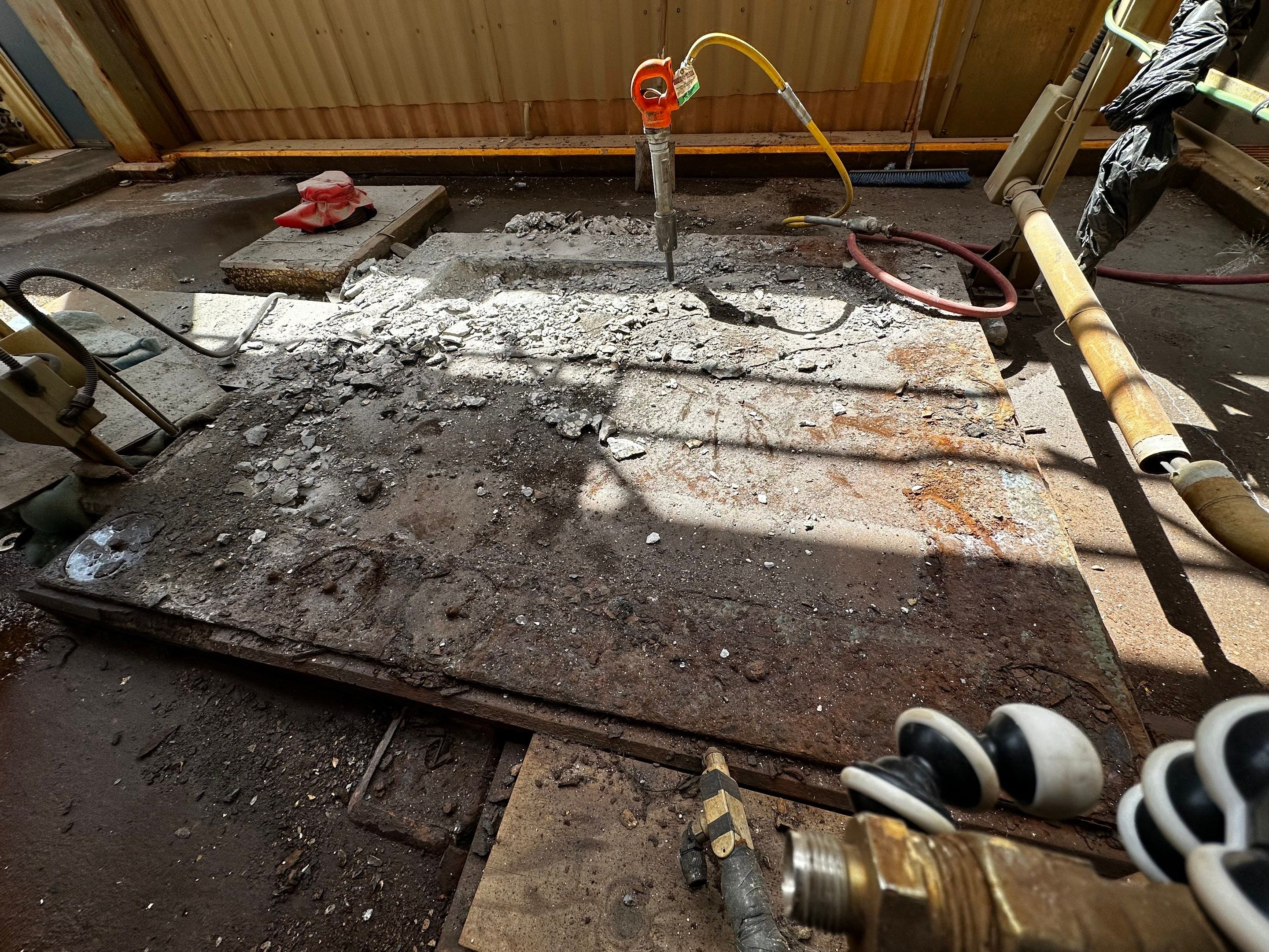
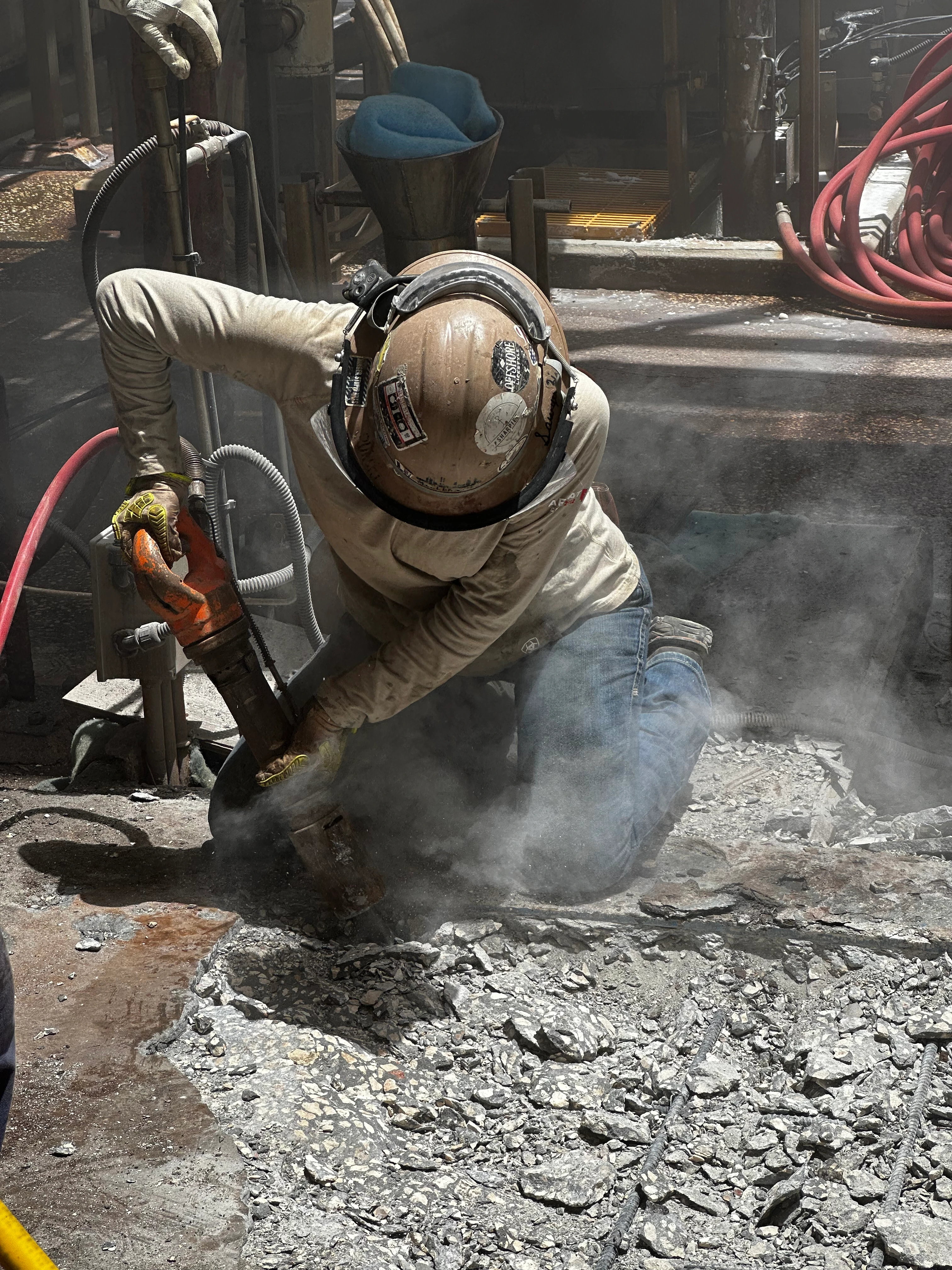
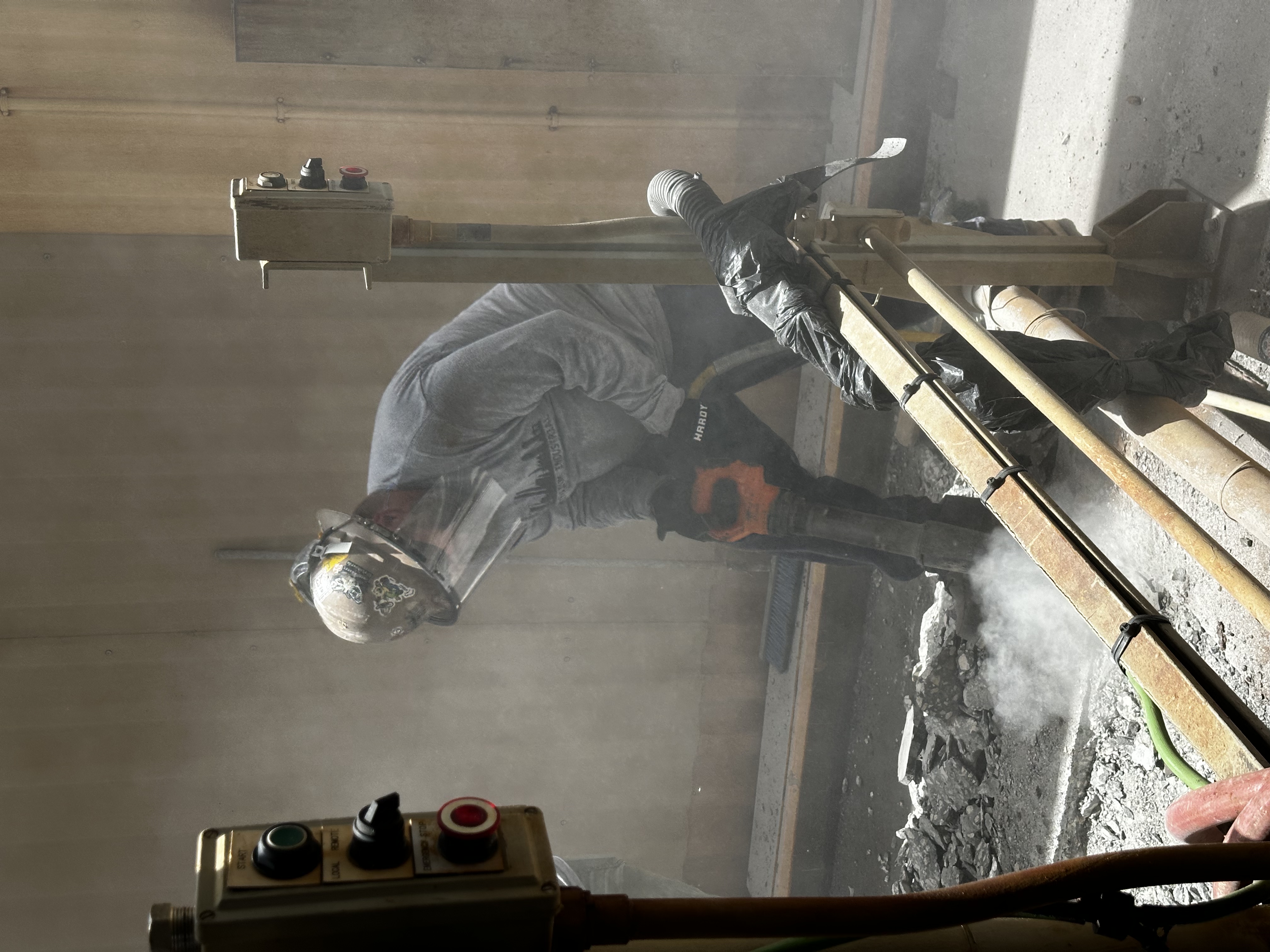
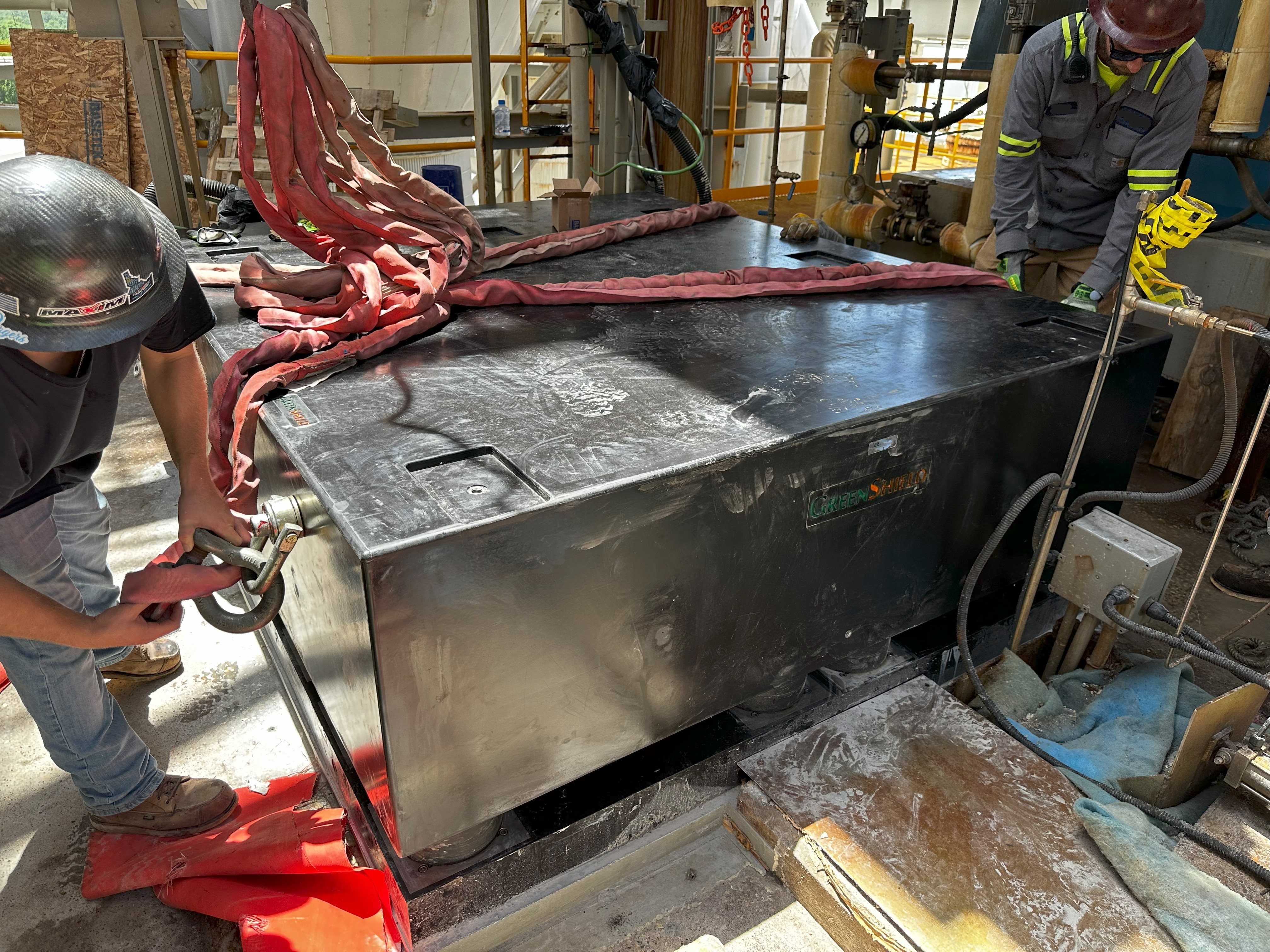
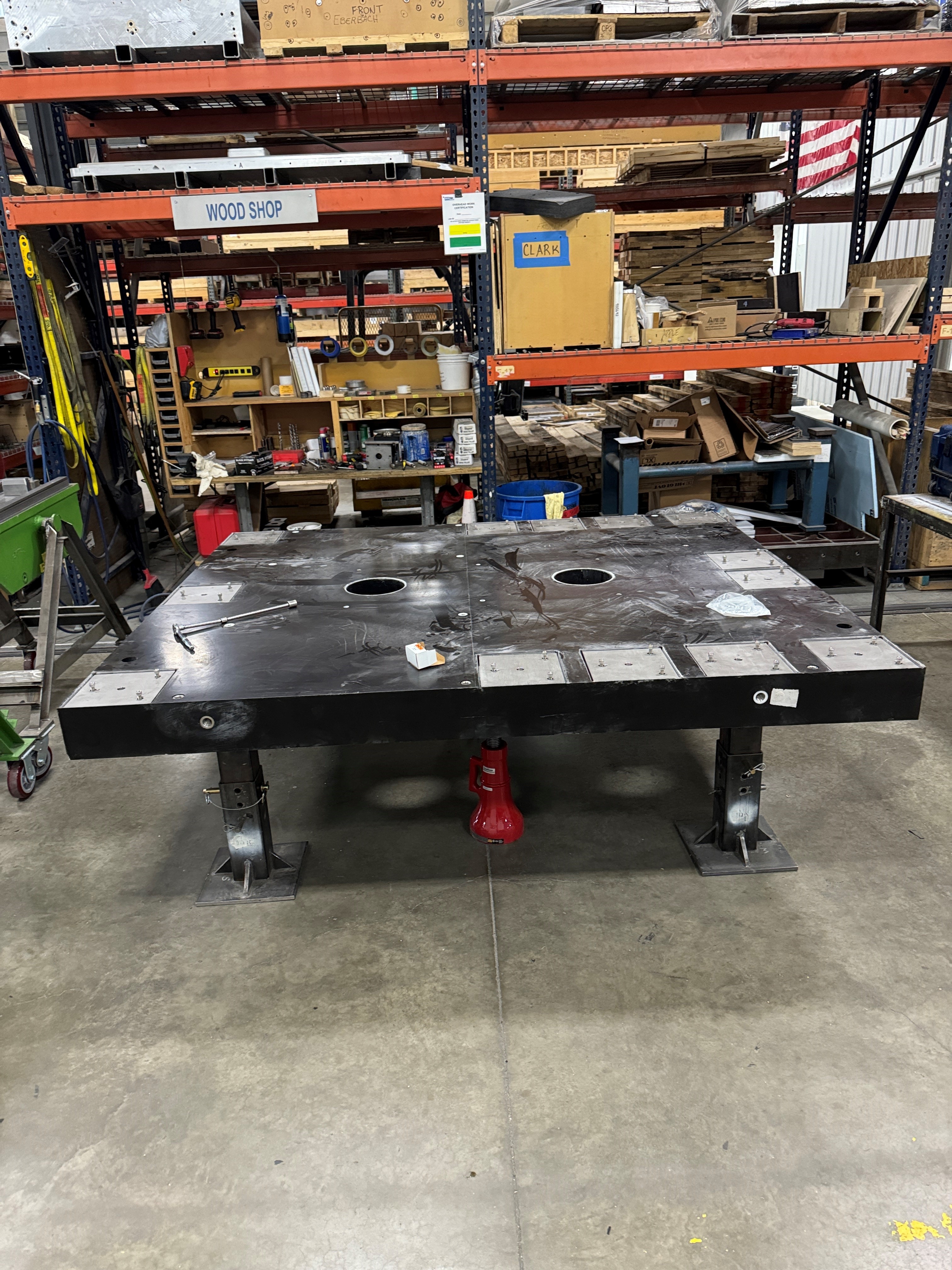
During — foundation removal and deck preparation
SYSTEM SPECIFICATIONS
Monolithic polymer block construction — no ferrous reinforcement
Engineered for chemical resistance to chloride exposure
Vibration damping properties matched to rotating equipment requirements
Dimensional stability under sustained load conditions
Designed for compatibility with future isolator replacement procedures
The installation scope included removal of the existing deteriorated concrete
foundation, deck and isolator inspection, fabrication and installation of the
polymer block system, precision leveling and alignment, and return of all
centrifuge equipment to operational service.
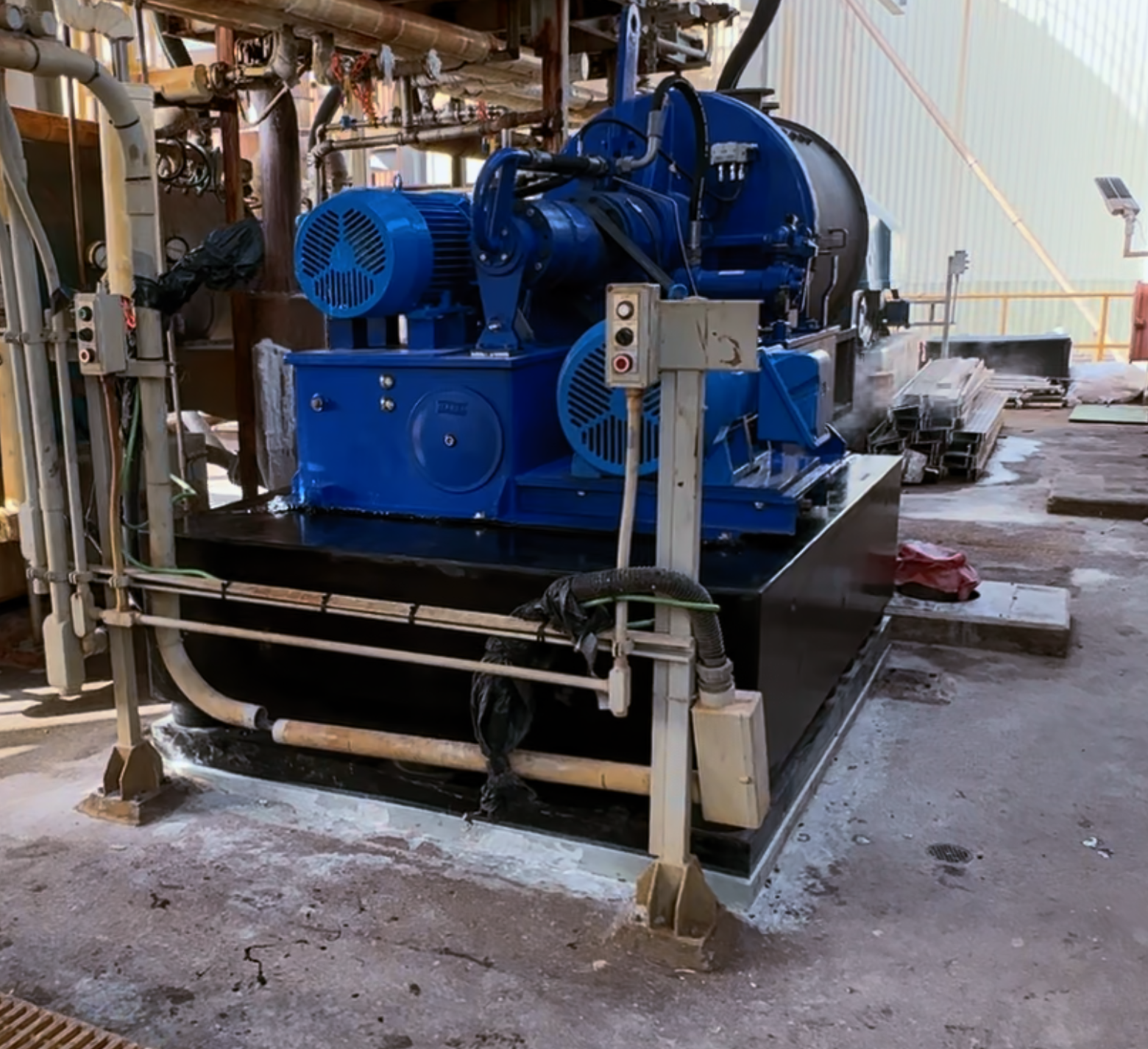
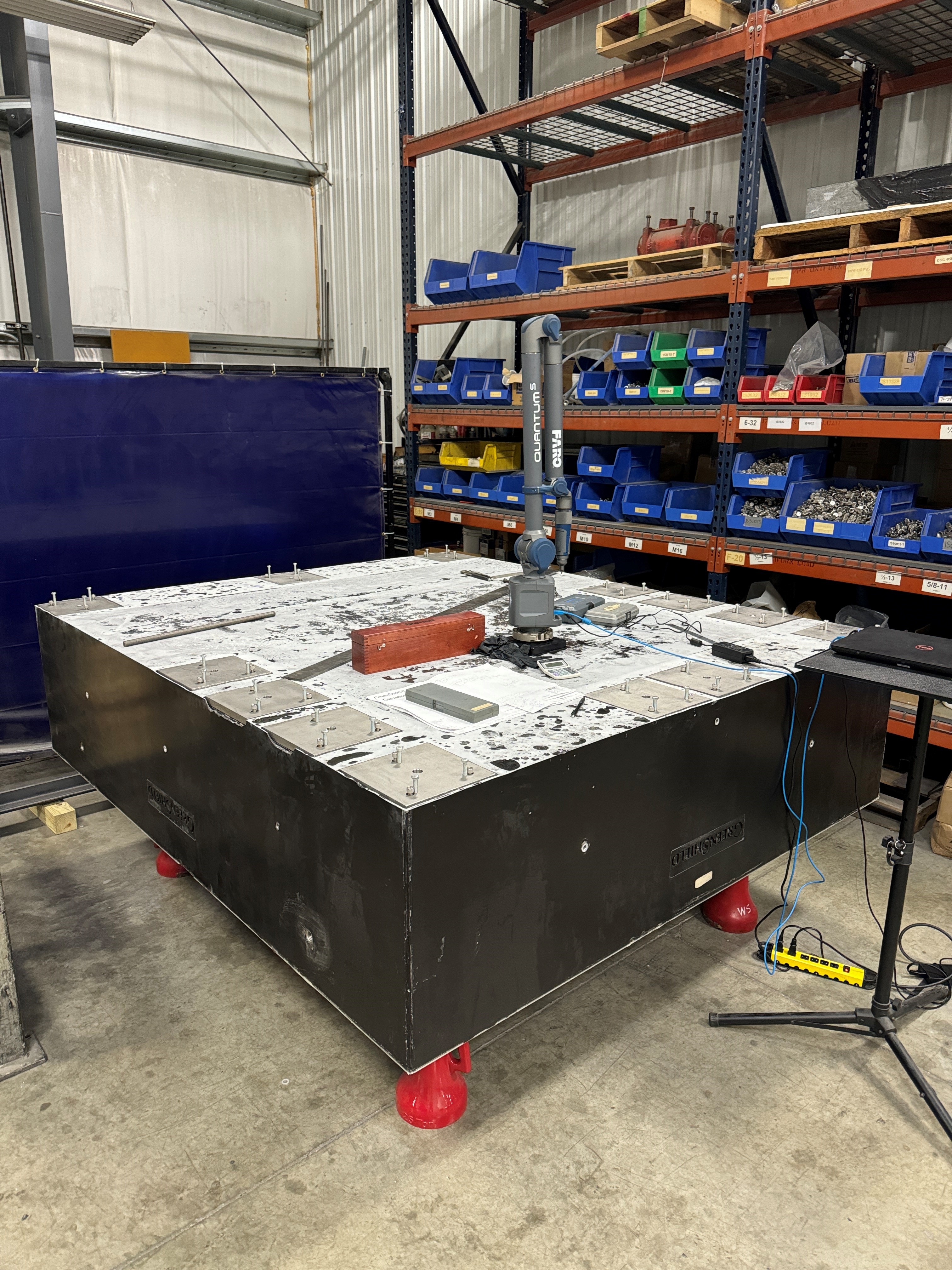
After — completed polymer block installation, centrifuge returned to service
// The Technology
THE GREENSHIELD FOUNDATION SYSTEM
The polymer block system installed in this project is built on the BaseTek GreenShield Foundation System — an engineered polymer concrete foundation platform purpose-built for rotating and reciprocating industrial equipment. Unlike traditional steel-reinforced concrete, GreenShield foundations are monolithic polymer structures with no ferrous reinforcement, making them immune to the chloride-driven corrosion cycle that destroyed the previous concrete foundations at this facility.
GreenShield foundations are engineered to deliver compressive strength, chemical resistance, and vibration-damping characteristics that exceed conventional grout systems — all in a single corrosion-proof structure. The system is designed for long service life in the harshest process plant environments: acid environments, marine exposure, chemical spill zones, and anywhere that embedded steel is a long-term liability.
Why GreenShield? Where epoxy grout protects the grout layer, GreenShield eliminates the corrosion pathway entirely — no rebar, no steel, no failure mode driven by chloride or chemical ingress.
The polymer block foundations have been in continuous service in a chloride-rich
environment for three years. The result is straightforward: the system looks and
performs exactly as it did on installation day.
Zero corrosion observed after 3 years of continuous chloride exposure
Zero maintenance required — no touchup, no repairs since installation
Visually unchanged from installation condition — no cracking, no migration
Crane mobilization cost eliminated — no foundation work required during next shutdown
DEALING WITH A CORROSION CHALLENGE?
Tell us what you're working with — foundation failures, chemical exposure, recurring maintenance costs —
and we'll put together a scope and estimate within one business day.